
Entry #1
- Kylie Ward

- Aug 19, 2023
- 6 min read
Introduction/Weekly Update: This week is my last technical week of summer since being done with school last December. I am currently preparing for orientation and my first graduate program classes coming up very soon. I decided that there is no better time than now during my free time to recreate my blog image and form a new posting schedule so the following entry is me easing back into my personal work!
Sustainability News Sunday:
[This is not my original work it is meant to provide a summary of the news article(s) for more effortless reading]
Summer is not what it used to be. Extreme heat is becoming more frequent, severe, and long-lasting, with less overnight relief as nighttime temperatures also rise. It's now common for multiple disastrous heat waves to batter different parts of the planet at the same time, fueling droughts and wildfires.
That's because of the climate crisis: Human activities have released so much heat-trapping carbon dioxide and methane into the atmosphere that average global temperatures are rising. All over the planet, it's becoming hard to ignore.
So far, this summer has brought the hottest day, week, and month in recorded history. Deadly heat waves have pummeled the US, Mexico, Europe, the Mediterranean, North Africa and the Middle East, China, Siberia, South Asia, and even South America where it's winter.
California's Death Valley has long been considered the hottest place on Earth. The National Park Service was still issuing an "Extreme Summer Heat" warning tourists to "travel prepared to survive" because temperatures were expected to climb above 120 degrees Fahrenheit. And yet, tourists have flocked to Death Valley, explicitly to experience that extreme weather for themselves thinking it would be "a cool thing" to be there for what could be the "hottest day on Earth."
July was the hottest month on record, ever, by a wide margin
NASA announced dire news on Monday: No month in recorded history since 1880 has ever been as hot as this July. July 2023 didn't just break the record. It blew past it. "The difference between 2023 and 2019, which was the previous record, was hugely significant,"

Phoenix finishes a 31-day streak of breaching 110 degrees Fahrenheit
The hottest day in the world
Preliminary data indicate that Earth's average temperature hit an all-time record high on July 4, climbing to 63 degrees Fahrenheit (17.23 degrees Celsius). The hottest day is, "going to be when global warming, El Niño, and the annual cycle all line up together. Which is the next couple months," said Myles Allen.
The sea around the UK and Ireland is much warmer than experts expected
In June, sea temperatures reached an "unheard of" 41 degrees Fahrenheit (5 degrees Celsius) above normal around the United Kingdom. And it poses serious harm to marine plants and animal life. This region of the Atlantic usually isn't affected by rising sea temperatures since they typically have cool waters.
Arctic regions are reporting record temperatures, threatening permafrost thaw
Since early June, Siberia has been experiencing temperatures regularly climbing above 100 degrees Fahrenheit (38 degrees Celsius). In past years the average temperature in June was around 74 degrees Fahrenheit (23 degrees Celsius). These record-setting temperatures pose a risk to the region's permafrost, a permanently frozen layer of soil that holds huge amounts of trapped carbon dioxide and methane. Once it thaws it releases these potent greenhouse gasses into the atmosphere, which will in turn make the planet even warmer.
New York City and Boston were engulfed in unhealthy smoke wafting from unseasonable Canadian wildfires
New Yorkers looked up to an orange sky on June 6, as smoke was coming off of raging Canadian wildfires that drifted across the Northeastern US. The smoke from those fires rolled across the US, triggering air quality alerts and darkening skies from Seattle to St. Louis and New York to the Carolinas.
Canada is battling hundreds of wildfires that are hitting both sides of the country at the same time, an "unusual" occurrence for this time of year. Alberta alone is fighting 92 wildfires, almost a third of which were labeled "out of control" as of May 18. Around 19,500 people had to evacuate their homes as of May 16, CBC News reported. The fires follow record-breaking temperatures battering the country's northwest, which have already burned an area about 1200% larger than normal this year.
Extreme heat defines the summer outlook for the US: hotter than average through August
An early-season heat dome baked the Pacific Northwest
A record heat wave in the Pacific Northwest has caused the area to become vulnerable to increased fire activity because of, "above-average temperatures, dry conditions, and some expectations for gusty winds over the next few days." In Portland, a high of 108 set an all-time record for August. The Northwest and far northern California have been baking in triple-digit heat all week, with extremely low humidity. Dreaded dry thunderstorms have brought a lot of wind and new ignitions from lightning strikes, but very little rain.
Fire managers say with climate change, things feel pretty flipped upside down right now. It's the middle of August and yet the worst wildfires so far this year have happened in the tropics and near the Arctic.
But despite these fires, UCLA climate scientist Daniel Swain says the West is still benefiting from a cool wet spring. "This does not look like an August 2020 repeat despite some rumors," he says. "The level of lightning activity is much lower, the size and the behavior of fires is smaller and less aggressive for the most part, so far."
A sign of the times, maybe: Swain and other climate scientists are now shifting their attention from wildfires to Hurricane Hilary, which could bring heavy rain and mudslides to fire-scarred mountains in southern California.

Back-to-back heat waves menaced China's power grid
Heat advisories were issued across China as Beijing was expected to swelter. China's usually moderate-climate area Yunnan has already recorded heat up to 40 degrees Celsius (104 degrees Fahrenheit), putting pressure on the local power grid as millions turned to their air conditioners for relief. The heat waves are hitting China earlier in the season than usual, which could be damaging to crops and lead to food shortages.
An incoming El Niño could turn up the heat
An El Niño effect could exacerbate this summer's heat. The National Oceanic and Atmospheric Administration just declared the end of an almost two-year cool phase in March. Oceans worldwide hit record-high temperatures at 21.1 degrees Celsius (70 degrees Fahrenheit) in April.
Horses collapsed amid Spain's scorching April temperatures
Temperatures surpassed 100 degrees Fahrenheit in Spain multiple times that month. In Catalonia, an irrigation canal serving 50,000 hectares of farmland closed because there wasn't enough water.
Deadly humid heat swept South Asia
The last two weeks of April broke temperature records across Bangladesh, India, Thailand, and Laos. In large regions of South Asia in April, the heat index in some areas approached the "extremely dangerous" 54 degrees Celsius (129.2 Fahrenheit). Vietnam broke the record for its hottest day on May 6th, with a blistering temperature of 111.3 degrees Fahrenheit (44.1 degrees Celsius). The extreme early-season heat brought a sudden spike in heat stroke cases, a surge in electricity demand, melting roads, and over a dozen deaths reported in India and Thailand.
-----

Ambassador Work: Unfortunately I don’t have any new work to post about from my ambassadorship but I did receive these organic cotton socks from completing the Earth Day Bingo challenge back in April. I will try my best to showcase my sustainable outfits from Happy Earth Apparel and remind you that you can get 15% off Happy Earth Apparel (@happyearth) with this link: www.happyearthapparel.com/kyliesgreenspace or use the code KYLIESGREENSPACE
All Trails Activity: This is all my activity on the app since I moved here!


Mountain Biking at Coal Seam, Community Ditch Trail, Marshall Mesa, Mesa Valley Trail summary: 3.5 miles, 217 ft elev. Gain, moving time: 58:05

Hiking at Crown Rock Trail summary: .3 miles, 16 ft elev. Gain, moving time: 8:42 minutes

Hiking at Tenderfoot Trail summary: 1.6 miles, 285 ft elev. Gain, moving time: 39:24 minutes

Road Biking at Waneka Lake to Hecla Lake Loop summary: 3.24 miles, 69 ft elev. Gain, moving time: 33 minutes
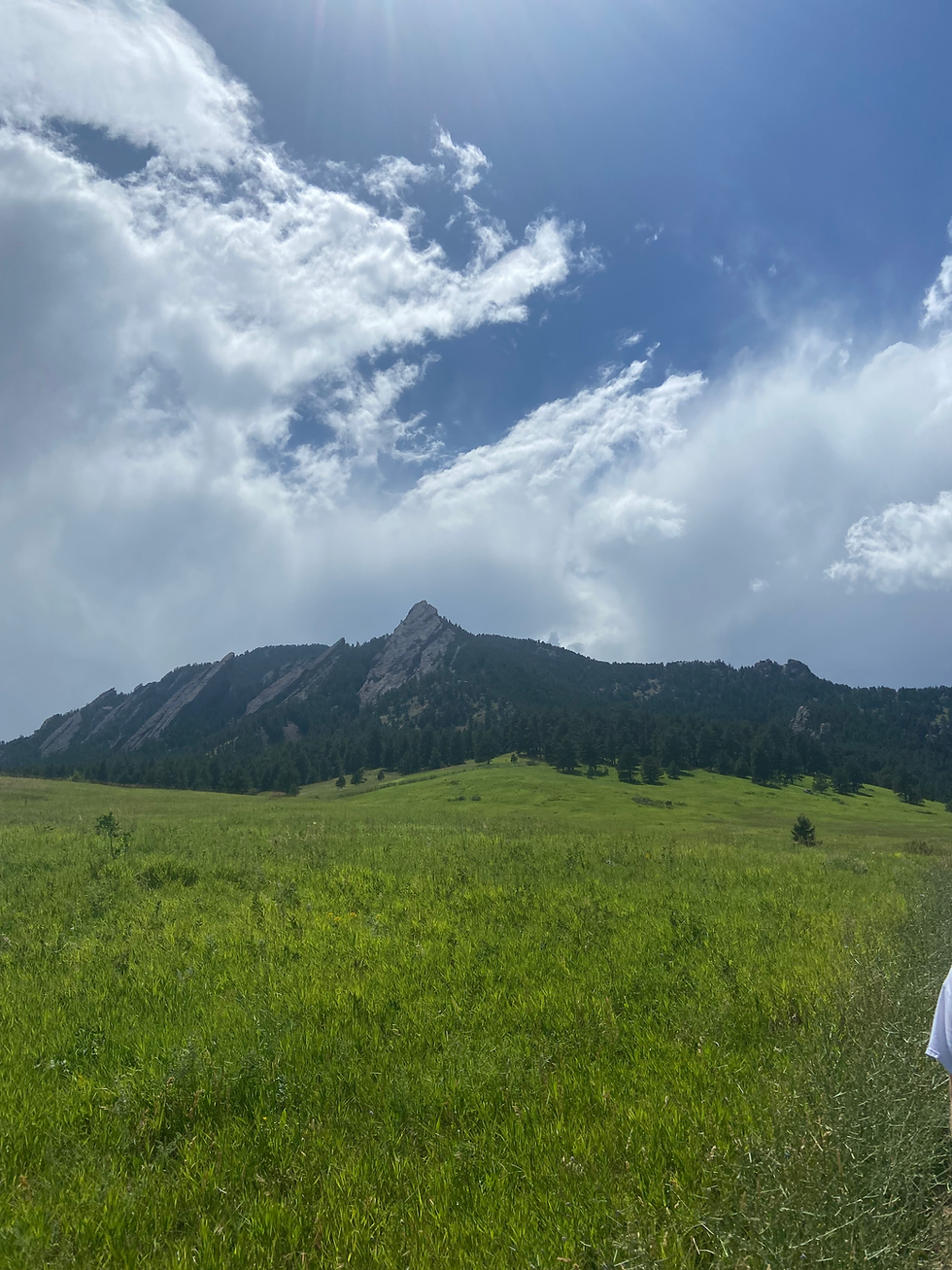
Hiking at Chautauqua, Blue Baird, and Meadow Trail Loop summary: 1.8 miles, 472 ft elev. Gain, moving time: 42:02 minutes

Hiking at Amphitheater and Saddle Rock Loop summary: 1.1 miles, 531 ft elev. Gain, moving time: 45:32 minutes

Mountain Biking at Flatirons Vista Trail summary: 3.7 miles, 289 ft elev. Gain, moving time: 46:54 minutes
Plant Growth: I finally have hanging plants in my new house! Here’s what they look like so far. I got the pots off Amazon 3 for ~$20






If you've read this far I really appreciate you and I'm looking forward to more engagement with Kylie's GreenSpace. Thank you so much!
Linktree: linktr.ee/kyliesgreenspace
Instagram: @kyliesgreenspace
With love,
Kylie


Oh my goodness babe